
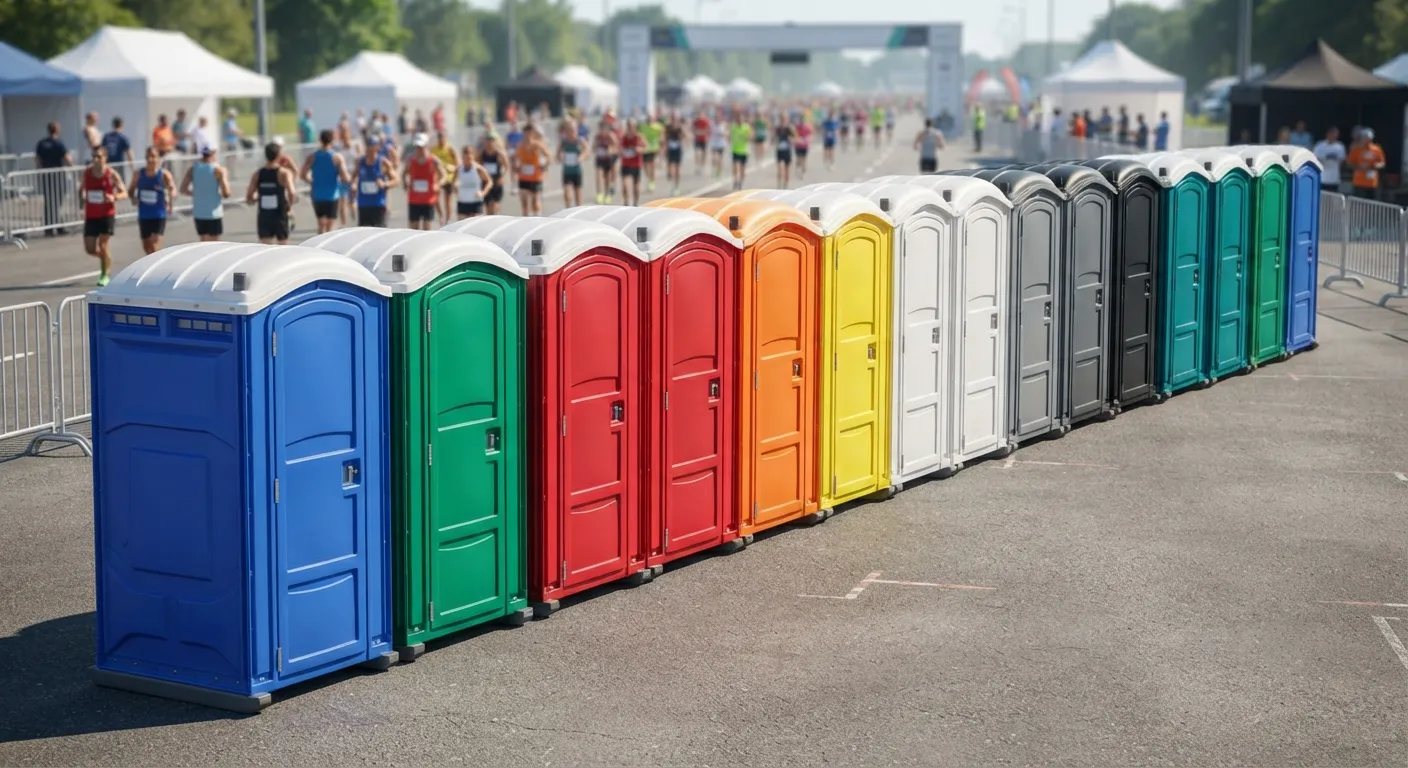
How many restrooms does a race in Shawnee need?
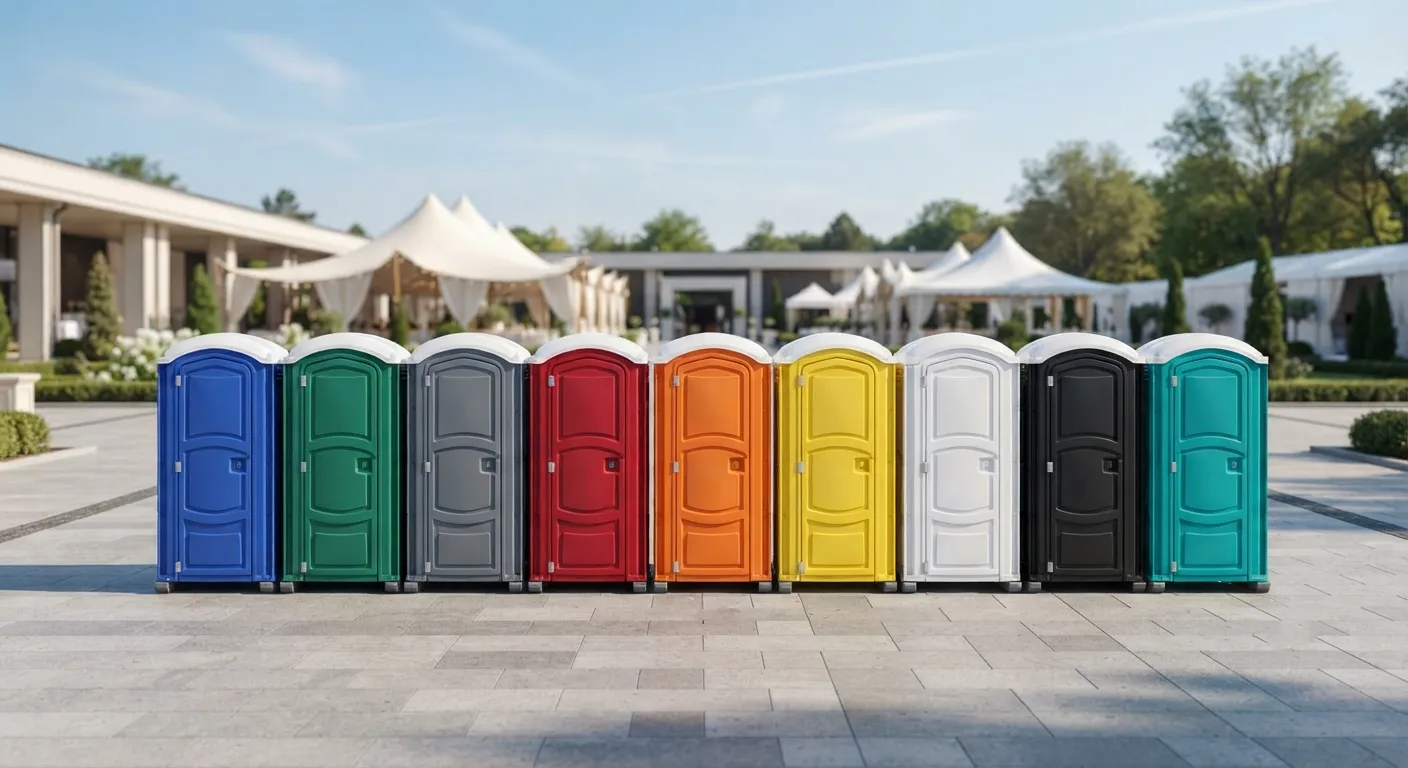
Start with the crowd, not the course. A standard unit runs 44 by 48 inches on the ground and stands about 92 inches tall, so clusters fit into narrow staging corners without eating your finish-line footprint. For a race with a few hundred runners, most organizers lean on the ratios in our how many porta potties do I need guide, then double up near the starting corral where lines form before the gun. ADA Standards section 213.2 requires that at least 5 percent of a cluster be accessible, with a minimum of one unit, so a bank of ten standard toilets needs at least one ADA accessible porta potty in the mix. That accessible unit needs a 60 inch turning circle inside per ADA Standards section 304.3.1, and the route to it should hold a 36 inch clear width under section 403.5.1. Aid stations at mile markers along the route benefit from a lighter footprint: a couple of standard porta potty rental units and a handwashing station rental near any water or fuel tables. If the race finishes near food vendors, pair restrooms with a hand sanitizer station rental at the serving line. For events with VIP tents or a runner's village, a deluxe flushable porta potty or a full restroom trailer rental upgrades the experience without adding much to the layout.
Where should restrooms go on a race course?
Placement drives everything else. Units need firm, level ground, and ADA Standards section 302.1 calls for surfaces that are stable, firm and slip resistant, which rules out soft turf or loose gravel near a finish chute. Ramps into any accessible unit can't exceed a 1:12 slope under ADA Standards section 405.2, so a trailer or ADA unit set on a curb line needs a real ramp, not a shim. Door hardware matters too: ADA Standards section 309.4 requires operable parts usable with one hand and no more than 5 pounds of force, and section 404.2.3 sets a 32 inch minimum clear door opening. Race organizers running events that draw from Shawnee and nearby towns should scout delivery access early. A porta potty placement guide helps map corrals, timing mats and restroom clusters so nothing blocks the finish camera. If your race also needs light towers for a pre-dawn start or an evening finish, illumination levels for work areas fall under OSHA 1926.56(a), a useful reference when you're deciding how many light tower rental units to stage along a dark stretch. Courses that cross private land or need barricades should also look at crowd control barrier rental and temporary fence rental options for corral lines and no-go zones.
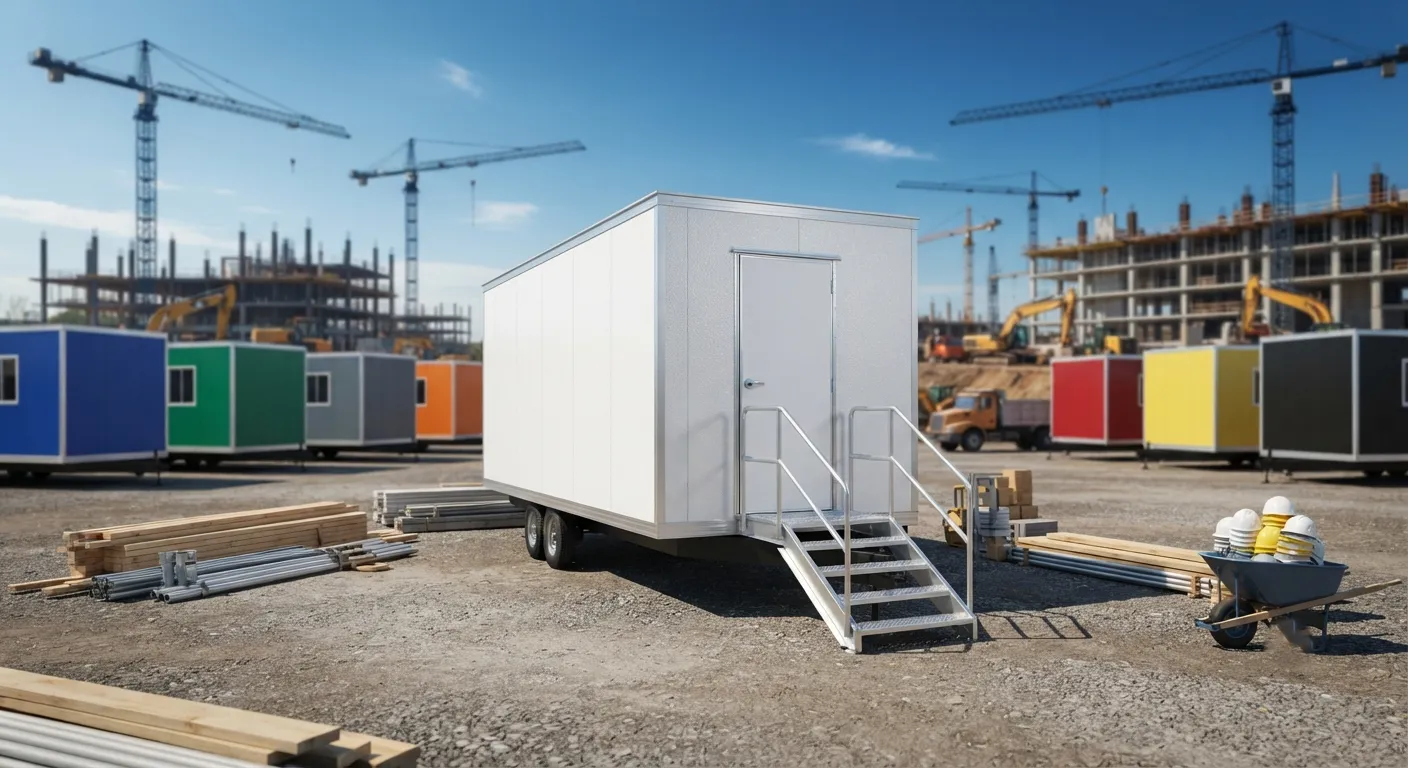
Does a race need a temporary power pole for timing equipment?
Yes, if you're running timing mats, PA systems or a results tent, a temporary power pole keeps cords off the course and equipment running without a generator hum drowning out announcements. Bracing matters more than people expect, and knowing how to brace a temporary power pole before race day saves a scramble later: a power pole needs guy wires or a braced base secured before the truck leaves, because a loose pole near a finish line is a hazard, not a convenience. Crews typically anchor the base plate, run diagonal bracing to grade stakes at three or four points around the pole, and check the pole is plumb before hanging any load, the same way a light tower or a sign structure gets secured on a job site. GFCI protection on any circuit run across a course is required under OSHA 1926.404(b)(1)(ii), which matters when timing gear and restroom lighting share the same drop. Pair the power setup with a storage container rental for gear, medals and water pallets, and a roll-off dumpster rental for post-race cleanup. Races staged near Merriam, 6.3 miles east of Shawnee, or Bonner Springs, 7.0 miles northwest, often share equipment between weekend events, so booking power and restrooms together on one delivery saves a trip.
FAQ
How far in advance should I book restrooms for a race?
Book as soon as your course and headcount are set, ideally weeks out for a marathon-sized field. Weekend events carry premium rates, and standard units in the 200 to 400 runner range often need event restroom rental planning done early so delivery trucks get the drive time they need across Shawnee.
Can I get accessible restrooms for a race with wheelchair participants?
Yes. ADA Standards section 213.2 requires at least one accessible unit per cluster, and section 308.2.1 sets a 48 inch maximum reach height inside. Talk to us about a dedicated ADA accessible porta potty near the finish and any wheelchair-division staging area.
Do race restrooms need handwashing stations too?
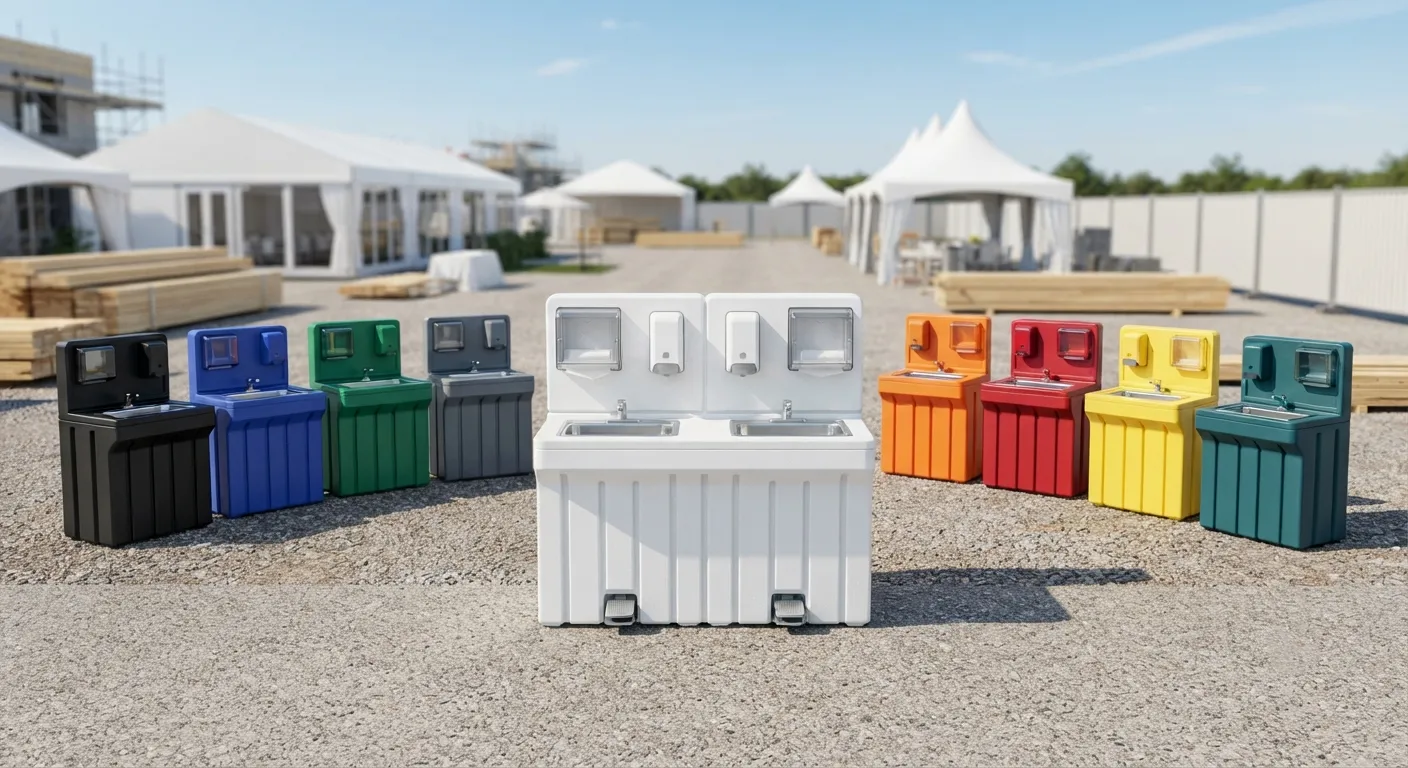
General sanitation under OSHA 1926.51(c) covers toilet counts, and a handwashing station rental rounds out the setup near aid stations and food tents. Runners handling gels and electrolyte tabs appreciate a rinse station before the next mile.
What size restroom trailer works for a race finish area?
It depends on runner count and whether you're hosting a post-race party. A 2 stall restroom trailer suits a smaller field, while larger races with spectators often step up to a 4 stall restroom trailer or bigger.
Will a temporary power pole work for a race with no nearby electrical hookup?
Yes, that's the point. A braced temporary power pole delivers power to timing tents and PA gear anywhere on the course. Check our temporary power pole page for setup details before your Shawnee race weekend.
Next step
Get a delivery date
Tell us the address, the dates and the headcount. We size the order and confirm the route.